The Four Goals of Life: the Four Purusharthas
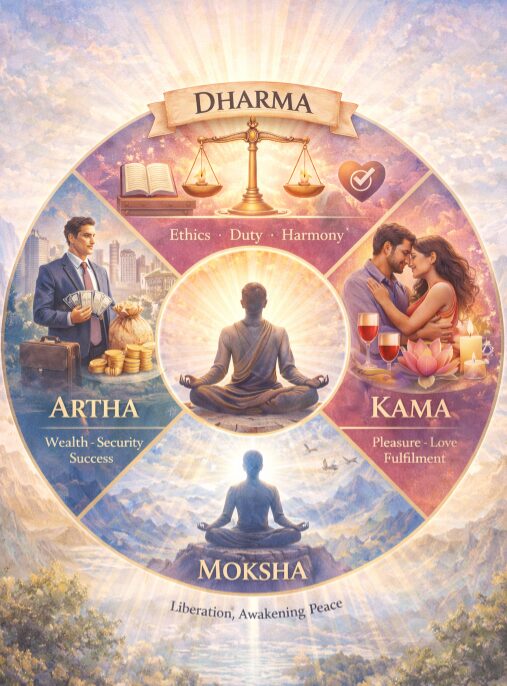
Across centuries of Indian philosophy, life has been understood not as a random journey, but as a purposeful progression guided by four foundational aims known as the Purusharthas. These four goals—Dharma, Artha, Kama, and Moksha—offer a holistic framework for living a balanced, meaningful, and a fulfilling life.
Rather than promoting renunciation or indulgence alone, this ancient wisdom recognizes that human life is multi-dimensional. We are moral beings, material beings, emotional beings, and spiritual beings all at once. The Purusharthas harmonize these aspects, guiding us toward inner fulfillment and collective well-being.
Let’s explore each of these four goals and how they interrelate.
1. Dharma (righteous duty/ethics): The Foundation of Right Living
Dharma is the ethical and moral compass of life. Often translated as “duty,” “righteousness,” or “right way of living,” dharma refers to living in alignment with truth, responsibility, and cosmic order.
At its core, dharma asks the question: What is the right thing to do?
Dharma is not a rigid set of rules; it is contextual and personal. Your dharma as a parent may differ from your dharma as a professional, friend, or citizen. It includes honesty, compassion, integrity, and accountability, but also self-awareness—understanding your role, strengths, and responsibilities at different stages of life.
Without dharma, other pursuits lose their grounding. Wealth without ethics becomes exploitation. Pleasure without values becomes addiction. Dharma ensures that all other goals are pursued in a way that uplifts both the individual and society.
It is the guiding principle that helps you navigate choices, relationships, and responsibilities with clarity and integrity. Rather than being a one-size-fits-all code of conduct, dharma is deeply personal and evolves with your stage of life, circumstances, and inner growth.
Dharma acts as a unique blueprint for living a good life and encompasses the following major aspects:
- Ethical Principles: Upholding honesty, non-violence, truthfulness, and kindness.
- Personal Duty: Fulfilling your roles as a child, parent, spouse, friend, or professional.
- Societal Contribution: Contributing positively to the well-being of society.
- Environmental Responsibility: Respecting and protecting the nature.
Living by Dharma is not about rigid rules, but about cultivating a sense of inner compass that guides your actions towards what is right and ethical. It brings a sense of inner peace and contributes to a harmonious society.
Examples of Dharma in the Modern world:
Example 1 – A business owner increases profits by underpaying workers, forcing excessive work hours, or cutting safety measures. Financially, the business may thrive, but it does so by harming others. Over time, this creates inequality, resentment, and suffering.
Another example is corruption—accepting bribes, manipulating systems, or deceiving customers. The individual gains wealth, but society pays the price through mistrust and injustice.
With Dharma in place the same business owner earns profit while paying fair wages, maintaining ethical standards, and contributing positively to the community. Wealth then becomes a force for stability, shared growth and eternal satisfaction rather than some sense of insecurity or feeling of heaviness bothering you.
Example 2 – Enjoying food is a healthy form of pleasure. But without moderation or self-awareness, it can become overeating, leading to health problems and loss of self-control.
Similarly, entertainment—social media, gaming, or substances—can provide relaxation and joy. Without values or limits, these can turn into addictions that drain time, energy, and mental well-being.
With dharma pleasure is enjoyed mindfully and in balance. One knows when to indulge and when to stop. Pleasure becomes restorative, not destructive.
Example 3 – A person seeks emotional or physical pleasure without honesty—through manipulation, betrayal, or lack of commitment. One person’s pleasure results in another’s pain.
With dharma relationships are built on trust, respect, consent, and responsibility. Pleasure is shared, not taken at someone else’s expense.
2. Artha: Prosperity and Material Well-Being
Artha represents material prosperity, financial security, and worldly success. It acknowledges a fundamental truth: life requires resources, food, shelter, education, healthcare, and stability are necessary for a dignified and purposeful existence.
However, artha is not about greed or accumulation for its own sake. It emphasizes right means of earning and responsible use of wealth. When guided by dharma, artha becomes a tool for empowerment—supporting families, building communities, and enabling generosity.
Ancient texts recognized that poverty can hinder moral and spiritual growth. When basic needs are unmet, higher aspirations become difficult. Artha, therefore, is essential—not as the ultimate goal, but as a support system for a well-lived life.
In modern terms, artha includes career growth, entrepreneurship, financial planning, and economic independence—pursued ethically and mindfully.
Key aspects of Artha include:
- Financial Security: Earning a livelihood through honest means.
- Resource Management: Wisely managing wealth, property, and other resources.
- Economic Stability: Contributing to the economic well-being of the family and community.
- Support for Others: Having the means to help those in need and support noble causes.
Artha is not an end in itself, but a means to facilitate a life lived in accordance with Dharma and to enable the pursuit of Kama and Moksha. Without sufficient Artha, it can be challenging to fulfill duties or enjoy life’s legitimate pleasures.
Examples of Artha in the Modern world:
Example 1 – A parent wants to provide good education and healthcare for their child. The intention (dharma) is strong, but without stable income, paying school fees or medical bills becomes stressful or impossible.
Here, lack of artha limits the ability to live out one’s responsibilities, even when the heart is in the right place.
Example 2 – A couple deeply cares for each other, but constant financial instability leads to anxiety, conflict, and emotional exhaustion. Love (kama) exists, but the stress of survival overshadows intimacy and joy.
Artha provides the space for relationships to breathe.
Example 3 – Enjoying a meal out, taking a short vacation, pursuing art, music, or hobbies—all require some level of material support. When finances are insecure, even simple pleasures feel like luxuries or sources of guilt.
Without artha, kama becomes constrained—not because pleasure is wrong, but because survival comes first.
Example 4 – Constant worry about rent, food, or debt consumes mental energy. This makes it difficult to focus on self-growth, ethical living, or spiritual practices.
Artha doesn’t guarantee peace—but its absence often creates persistent anxiety that blocks higher pursuits.
3. Kama: Pleasure, Love, and Emotional Fulfillment
Kama refers to pleasure, enjoyment, love, creativity, and aesthetic fulfillment. It includes not only physical pleasure but also emotional connection, art, music, beauty, intimacy, and joy.
Contrary to the misconception that spirituality rejects pleasure, the Purusharthas affirm that pleasure is a legitimate and necessary goal of life. Joy nourishes the soul and gives life color and warmth.
Yet, kama must be guided by dharma and balanced by artha. When pursued unconsciously, pleasure can turn into excess, attachment, or harm. When pursued wisely, it enhances relationships, creativity, and emotional health.
Healthy relationships, meaningful experiences, laughter, and appreciation of beauty all fall under kama. It reminds us that life is not just about survival or duty—but also about celebration.
Aspects of Kama include:
- Love and Relationships: Experiencing deep emotional and physical connection.
- Art and Aesthetics: Enjoying music, art, nature’s beauty, and creative expression.
- Sensory Pleasures: Savoring delicious food, comfortable living, and pleasant experiences.
- Personal Hobbies: Engaging in activities that bring joy and fulfillment.
Kama adds color, flavor, and emotional depth to life. It reminds us to appreciate the present moment and find joy in our existence.
Examples of Kama in the Modern world:
Example 1 – A person fulfills all responsibilities—works hard, supports family, follows rules—but never allows rest, joy, or emotional expression. Over time, his life feels mechanical and empty.
Without kama dharma becomes duty without warmth.
Example 2 – A couple stays together out of responsibility alone, but there is no affection, shared enjoyment, or emotional intimacy. Even though the relationship “works” externally, it lacks nourishment.
Kama keeps relationships alive, not just intact.
Example 3 – When pleasure is denied or judged as wrong, it often returns in unhealthy ways—binging, addiction, emotional dependency, or secretive behavior.
Healthy kama consciously lived prevents destructive patterns.
4. Moksha: Liberation and Spiritual Freedom
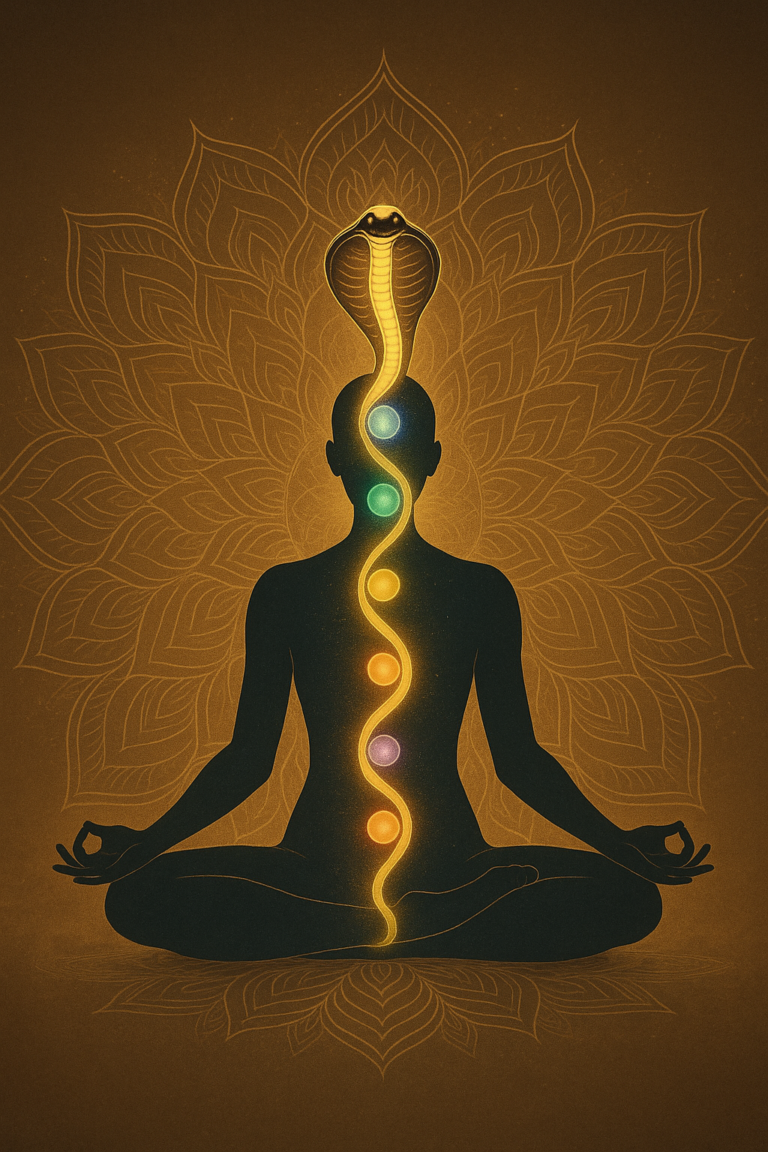
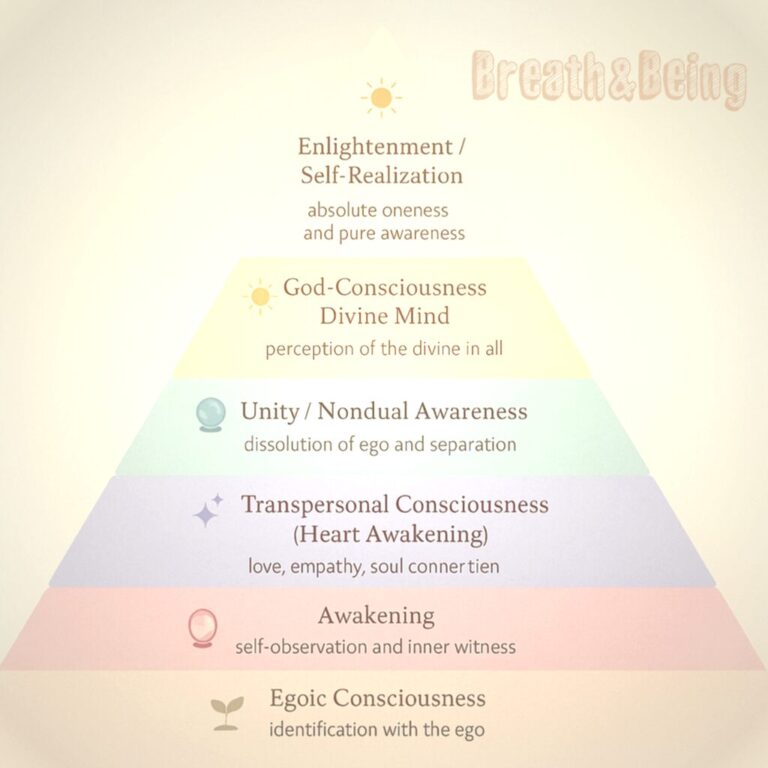
Moksha is the ultimate goal of life: liberation from suffering, ignorance, and the cycle of birth and death. It represents spiritual awakening, self-realization, and profound inner peace.
While dharma, artha, and kama operate largely within the world, moksha points beyond it. It is the realization of one’s true nature—the understanding that the self is not limited to ego, possessions, or temporary identities.
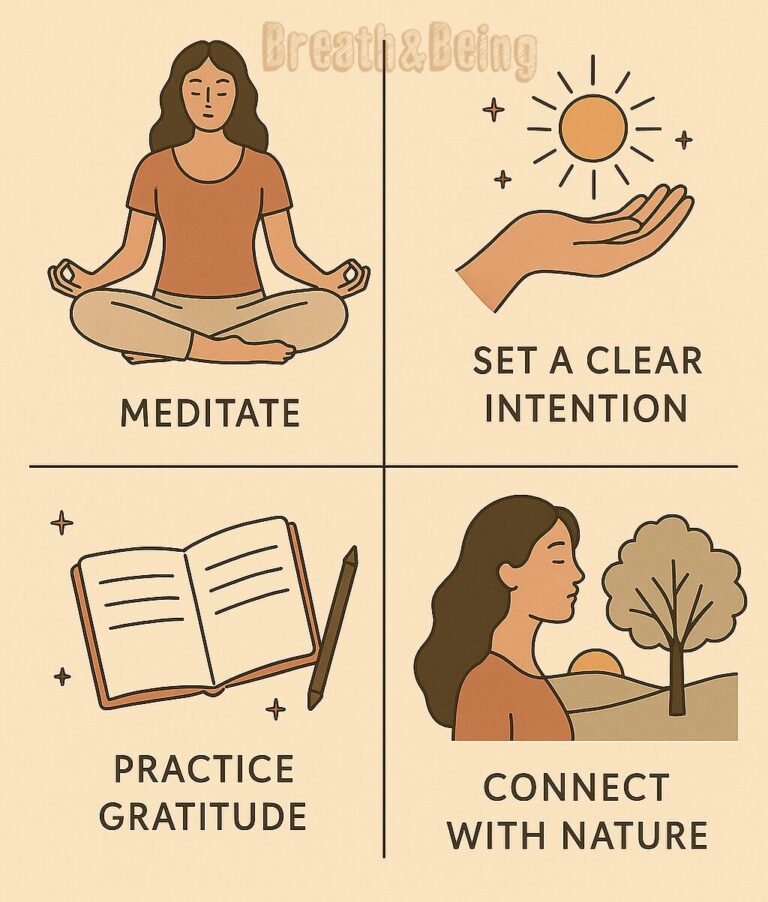
Moksha does not require withdrawal from life. Many spiritual traditions emphasize attaining liberation while living fully in the world, through wisdom, devotion, meditation, and selfless action.
In a modern context, moksha can be understood as freedom from compulsive desires, fear, and suffering—a state of clarity, equanimity, and deep contentment.
Moksha not as an escape from life, but as a natural flowering of a well-lived life. Moksha arises when life has been lived fully, consciously, and in balance—through dharma, artha, and kama.
How the Three Purusharthas integrates to create the way for Moksha –
Dharma Creates Inner Integrity – When life is guided by dharma, actions align with conscience. One lives truthfully, responsibly, and compassionately. Over time, this alignment reduces inner conflict. There is less guilt, less self-betrayal, and less fragmentation within the mind. This inner integrity becomes the psychological and moral stability necessary for spiritual insight. Dharma purifies intention.
Artha Brings Security and Freedom from Survival Anxiety – Artha, when earned ethically and used wisely, removes the constant anxiety of survival. It creates a sense of safety—physically, emotionally, and socially. When basic needs are met, the mind is no longer consumed by fear or scarcity. Attention naturally turns inward, toward meaning rather than mere maintenance.
Artha, in this sense, does not bind—it frees mental energy. Security creates the space in which deeper questions can arise.
Kama Brings Emotional Fulfillment and Release – Kama allows life to be tasted fully—love, beauty, joy, creativity, intimacy, and pleasure. When these experiences are lived consciously and without excess, they lead to contentment, not craving. Suppressed desire creates obsession. Fulfilled desire, held within dharma, gradually loosens its grip. Through healthy kama, the heart feels nourished. There is no constant hunger for “more.”
This fulfilment makes way for the soul to launch for the higher spiritual aspirations ones the desires of the lower plane are fully lived.
How Balance Leads to Moksha
When dharma steadies the conscience, artha calms the fear of survival, and kama satisfies the heart, something profound happens : The mind is no longer restless.
Desire loses its compulsive edge.
Life feels complete rather than lacking.
In this completeness, the question of moksha arises not as escape, but as an insight.
One begins to see:
“Even this fulfilled life is temporary. What, then, is permanent?”
Moksha emerges as clarity, not craving.
As freedom, not rejection.
As awakening, not withdrawal.
Moksha is not something new that is achieved.
It is what remains when inner conflict, fear, and craving have settled.
This is why the older traditions places moksha after the other three Purusharthas.
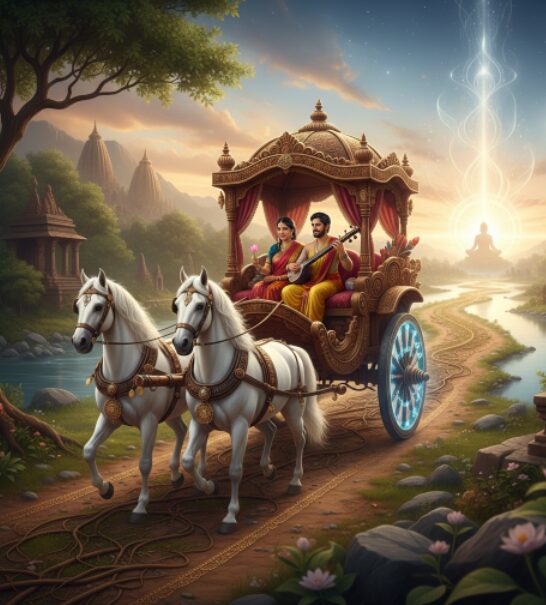
Imagine a beautiful chariot. Dharma is the sturdy wheels, Artha represents the strong horses pulling it, Kama is the activities and time you enjoy with your loved ones, and Moksha is the destination – a serene and expansive landscape. Without each component working in harmony, the journey would be incomplete or fraught with difficulty. By consciously integrating Dharma, Artha, Kama, and Moksha into our lives, we embark on a profound journey of self-discovery, purpose, and ultimate fulfillment. It’s a timeless wisdom that offers a holistic framework for living a truly meaningful human existence.