The Healing Power of Viparita Karani
Viprit Karani is a gentle inverted yoga posture widely known as Legs Up the Wall Pose. In Sanskrit, Viprit means inverted or reversed, and Karani means to do or action. Unlike advanced inversions such as Headstand or Shoulder Stand, Viprit Karani is a restorative and accessible pose suitable for beginners, elderly practitioners, and even people recovering from fatigue or mild illness.
This asana is deeply calming for the nervous system and is often practiced at the end of a yoga session or before bedtime to promote relaxation and mental clarity.
Meaning and Concept of Viprit Karani
Viprit Karani reverses the normal downward pull of gravity by elevating the legs above the heart. This gentle inversion improves circulation, soothes the mind, and allows the body to deeply rest. Classical yoga texts describe Viprit Karani as a mudra-like practice that rejuvenates the body and slows down the effects of aging when practiced regularly.
How to Practice
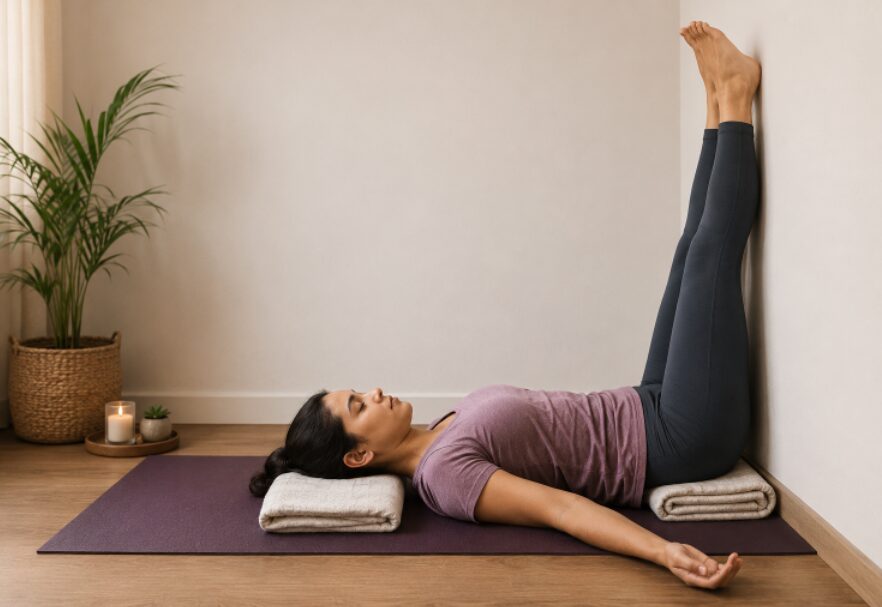
Viprit Karani with Wall (Supported Variation)
Step-by-Step Method
- Sit sideways next to a wall with one hip touching the wall.
- Slowly swing your legs up the wall while lowering your back onto the floor.
- Adjust your hips so they are close to or slightly away from the wall, depending on comfort.
- Extend your legs upward, keeping them relaxed and straight.
- Rest your arms by your sides with palms facing upward.
- Close your eyes and breathe slowly and deeply.
- Stay in the pose for 5–15 minutes.
Support Options
- Place a folded blanket or bolster under the hips for extra comfort.
- Use a pillow under the head or neck if needed.
Viprit Karani without Wall (Free Variation)
Step-by-Step Method
- Lie flat on your back on a yoga mat.
- Bend your knees and lift your legs upward.
- Support your lower back and hips with your hands.
- Raise your legs to a comfortable angle (not necessarily vertical).
- Keep the neck and shoulders relaxed on the floor.
- Maintain slow, rhythmic breathing.
- Hold for 30 seconds to 2 minutes, gradually increasing with practice.
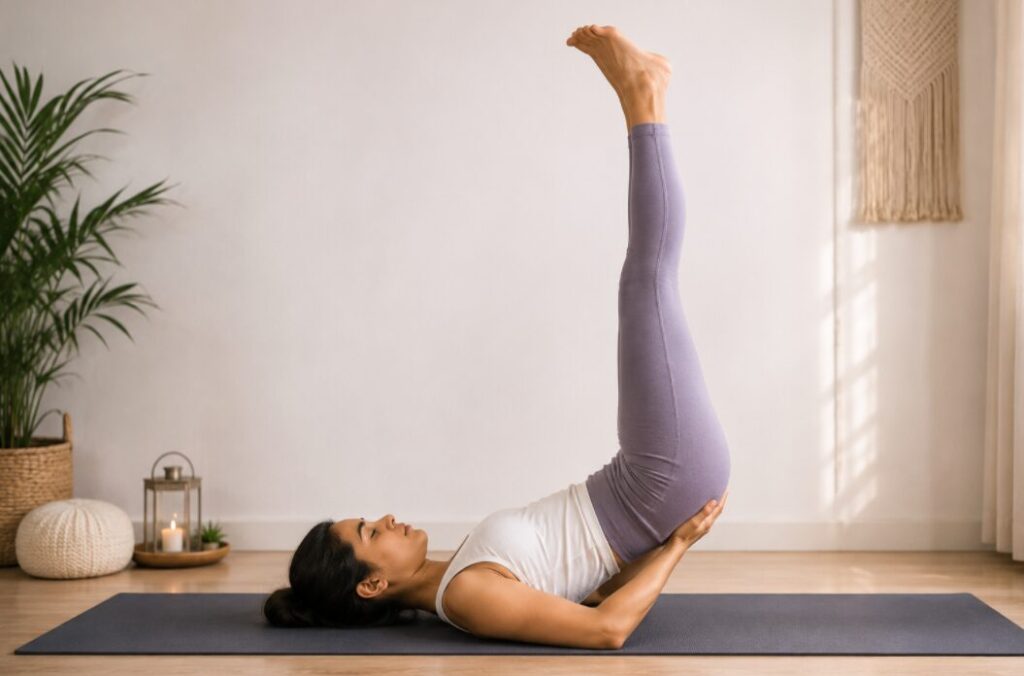
Note – This variation requires more core engagement than the wall-supported version and is suitable for those with some prior yoga experience.
Easy Variations of Viprit Karani
1. Bent-Knee Viprit Karani
- Keep knees slightly bent instead of straight.
- Ideal for beginners and people with stiff hamstrings.
2. Chair-Supported Viprit Karani
- Place legs on a chair instead of a wall.
- Suitable for people who cannot lift their legs fully.
3. Bolster-Supported Viprit Karani
- Place a bolster or cushion under the hips.
- Enhances relaxation and spinal comfort.
4. One-Leg-Up Variation
- Keep one leg up and the other bent.
- Helpful for those with limited flexibility or lower back sensitivity.
Benefits of Viparita Karani
Physical Benefits
• Improves blood circulation and venous return
Elevating the legs above the heart allows gravity to assist the return of blood from the lower body to the heart. This can reduce the workload on the veins and promote healthier circulation, especially after long hours of standing or sitting.
• Reduces lower back tension
As the body rests on the floor, the spine is gently supported and the lower back muscles are given a chance to relax. This can help ease mild tension caused by prolonged sitting or poor posture.
• Supports digestion and bowel function
The deep, relaxed breathing practiced in this pose stimulates the parasympathetic nervous system, which encourages healthy digestion. A relaxed body often allows the digestive organs to function more efficiently.
• Helps alleviate mild headaches
When headaches are triggered by stress, fatigue, or muscle tension, the calming nature of Viparita Karani may provide gentle relief. However, it should not be used as a substitute for medical care in cases of severe or persistent headaches.
• Relieves menstrual discomfort
Many women find this restorative pose soothing during menstruation, as it helps relax the pelvic region and reduce stress. It may ease mild cramps and promote a sense of overall comfort.
Mental and Emotional Benefits
• Calms the nervous system
Viparita Karani encourages the body to shift from a state of constant alertness into a relaxed “rest and digest” mode. This helps quiet the mind and creates a deep sense of calm.
• Reduces stress, anxiety, and fatigue
The combination of gentle inversion, stillness, and slow breathing helps release physical and mental tension. Even a few minutes of practice can leave you feeling refreshed and emotionally lighter.
• Improves sleep quality
Practicing Viparita Karani before bedtime helps slow racing thoughts and relax the body, making it easier to fall asleep naturally. Many people include it as part of their evening wind-down routine.
• Enhances mental clarity and focus
When the mind is relaxed, it becomes easier to concentrate and think clearly. This pose can help reduce mental clutter and restore a sense of balance after a busy day.
Therapeutic Benefits
• Helpful for mild varicose veins
By improving venous return, Viparita Karani may help relieve the feeling of heaviness and discomfort associated with mild varicose veins. It is a supportive practice but should not be considered a treatment for underlying vein conditions.
• Beneficial for mild depression and burnout
The calming effects of the pose, combined with slow breathing, can help reduce mental exhaustion and improve overall well-being. While not a replacement for professional treatment, it can be a valuable addition to a holistic self-care routine.
• Supports hormonal balance by calming the endocrine system
Deep relaxation helps reduce stress hormones such as cortisol, allowing the endocrine system to function more efficiently. Although Viparita Karani doesn’t directly regulate hormones, lowering chronic stress can positively support hormonal health over time.
Breathing in Viparita Karani
• Practice slow, deep abdominal breathing.
Allow each breath to be gentle and unhurried, feeling the abdomen rise as you inhale and soften as you exhale. This naturally enhances relaxation and helps calm the nervous system.
• Inhale through the nose, expanding the abdomen.
Breathing deeply into the belly encourages the diaphragm to work efficiently, improving oxygen exchange while reducing shallow chest breathing associated with stress.
• Exhale gently, releasing tension from the body.
With every exhalation, consciously soften your shoulders, jaw, and facial muscles. Imagine letting go of physical and mental tension with each breath out.
• You may also practice Nadi Shodhana or natural breath awareness.
If you’re comfortable with pranayama, practicing Nadi Shodhana after coming out of the pose can deepen its calming effects. Alternatively, simply observing the natural rhythm of your breath can be equally restorative.
Duration
- Beginners: 3–5 minutes
- Intermediate practitioners: 5–10 minutes
- Advanced/restorative practice: up to 15 minutes
Best Time to Practice Viparita Karani
Viparita Karani is gentle enough to be practiced at different times of the day, and each time offers its own unique benefits.
• Early Morning (Best for Overall Health)
Practicing on an empty stomach in the morning is considered ideal in both yoga and Ayurveda. It helps improve circulation, gently awakens the body, calms the mind, and prepares you for the day ahead. Morning practice also allows you to experience the pose without the heaviness of digestion, making it easier to breathe deeply and relax.
• Evening (Best for Relaxation)
After a busy day, Viparita Karani helps relieve tired legs, reduce physical fatigue, and calm an overstimulated nervous system. It is an excellent way to unwind after work or prolonged standing.
• Before Bedtime (Best for Better Sleep)
Practicing for 5–15 minutes before sleep can help quiet racing thoughts and release accumulated tension from the day. It creates a sense of calm that makes it easier to fall asleep naturally.
• After Yoga or Exercise
Viparita Karani is often practiced as a restorative pose at the end of a yoga session. It allows the body to recover, slows the heart rate, and promotes deep relaxation after physical activity.
Practice on an Empty Stomach – For the best results, practice Viparita Karani on an empty stomach or at least 3–4 hours after a meal. This allows the body to relax comfortably without placing pressure on the digestive organs.
Tip: If your goal is overall wellness, make Viparita Karani part of your morning routine. If your goal is stress relief and better sleep, practice it in the evening or before bed. Both are beneficial—the ideal time simply depends on what your body needs most.
Precautions and Contraindications
Avoid or Modify if You Have:
- Severe neck or spinal injuries
- Uncontrolled high blood pressure
- Glaucoma or serious eye disorders
- Recent surgery involving abdomen, spine, or hips
- Severe lower back pain
Safety Guidelines
- Avoid jerky movements while entering or exiting the pose.
- Do not strain the neck or shoulders.
- Come out of the pose slowly by bending the knees and rolling to one side.
- Pregnant women should practice only under expert guidance.
Common Mistakes to Avoid
- Forcing legs to stay straight
- Arching the lower back excessively
- Holding the breath
- Staying in the pose despite discomfort
Summary
Viprit Karani is a simple yet powerful yoga posture that offers profound physical, mental, and emotional benefits. Its gentle nature makes it accessible to almost everyone, while its restorative effects make it invaluable in modern, stress-filled lifestyles. With regular and mindful practice, Viprit Karani can become a cornerstone of relaxation, rejuvenation, and holistic well-being.
Always practice yoga mindfully and consult a qualified yoga teacher or healthcare professional if you have medical concerns.